𝗕𝟮𝗕 𝗺𝗮𝗿𝗸𝗲𝘁𝗶𝗻𝗴 𝗶𝘀𝗻'𝘁 𝘄𝗵𝗮𝘁 𝗶𝘁 𝘂𝘀𝗲𝗱 𝘁𝗼 𝗯𝗲. 𝗔𝗻𝗱 𝘁𝗵𝗮𝘁 𝗺𝗶𝗴𝗵𝘁 𝗯𝗲 𝗢𝗞!
Always a pleasure to be invited to the HotTopics CMO Studio at BAFTA. This year, one theme kept resurfacing: B2B marketing continues to have an identity crisis.
We kicked off with the classic debate: Do we actually need a CMO? Should marketing report into sales? The CRO? The CGO?
Marketing might be the only function still regularly asked to justify whether it belongs in the building. We remain the function that must bring the receipts - every month, every quarter - to prove our worth.
And yet… the data says something very different.
Hot Topics’ benchmark research shows companies with CMOs on the board grow 2.5x faster than those without. That’s not a rounding error - that’s a strategy.
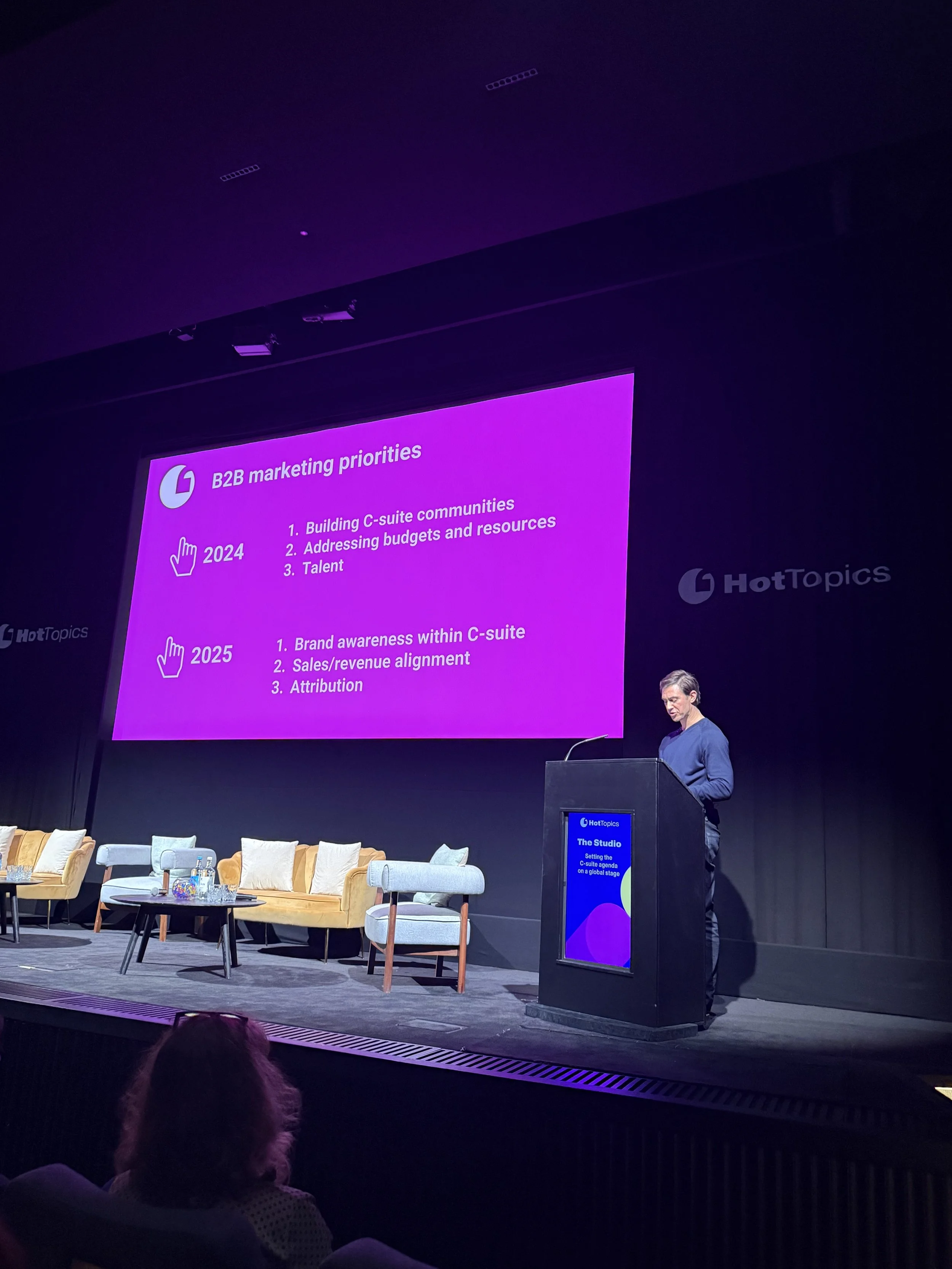
Other interesting reading was, according to HotTopics own research, the top three priorities for CMOs in 2025:
1️⃣ 𝗧𝗵𝗲 𝗖-𝘀𝘂𝗶𝘁𝗲 𝗮𝘄𝗮𝗿𝗲𝗻𝗲𝘀𝘀 𝗴𝗮𝗽. Marketing still struggles to reach senior decision makers. Millennial buyers dominate. Committees rule. Research happens long before intent surfaces.
2️⃣ 𝗦𝗮𝗹𝗲𝘀 & 𝗺𝗮𝗿𝗸𝗲𝘁𝗶𝗻𝗴 𝗮𝗹𝗶𝗴𝗻𝗺𝗲𝗻𝘁 𝗰𝗼𝗻𝘁𝗶𝗻𝘂𝗲𝘀 𝘁𝗼 𝗯𝗲… 𝗮 𝗷𝗼𝘂𝗿𝗻𝗲𝘆. In my 25+ years, this theme has never left the stage. It just rebrands itself every few years.
3️⃣ 𝗧𝗵𝗲 𝘁𝗮𝗹𝗲𝗻𝘁 𝗰𝗿𝘂𝗻𝗰𝗵 𝗶𝘀 𝗼𝘂𝘁, 𝗮𝘁𝘁𝗿𝗶𝗯𝘂𝘁𝗶𝗼𝗻 𝗮𝗻𝘅𝗶𝗲𝘁𝘆 𝗶𝘀 𝗶𝗻. With more strong candidates in the market, hiring isn’t the burning issue it was. Instead, attribution has taken centre stage - yet another way of asking marketing to prove its value.
So are we in crisis? Maybe. But it’s a productive one.
Great marketing still exists. So does poor marketing. Most of us operate somewhere between the two, nudging things forward - educating, influencing and building impact in organisations that don’t always see it.
But here’s the positive: conversations like this move the industry on.
They sharpen our thinking, reconnect us with purpose, and remind the business world that marketing is a growth engine - when it’s understood and empowered.
Huge thanks to the Hot Topics team for sparking the debate and bringing us all together. Philip Randerson Peter Stojanovic Faith Wheller Ruth Rowan Ross E. Chapman Duncan Harris