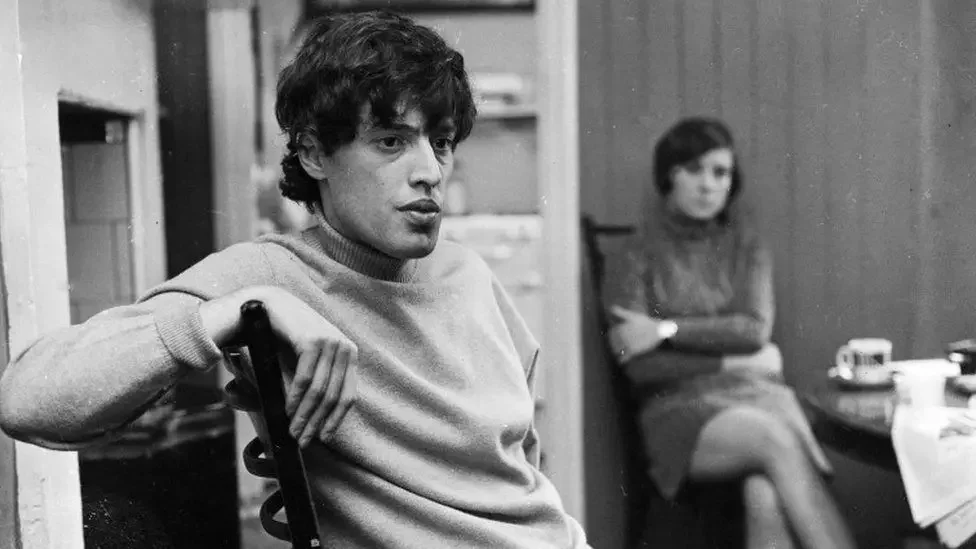
You may have read of the passing of acclaimed playwright and screenwriter Sir Tom Stoppard, who died last week at the age of 88.
He was a thinker who made language, art and ideas dance together (and was also not adverse to turn his hand to "lowbrow" films in the Indiana Jones and Star Wars franchises).
His death reminds us that words and stories leave a mark far beyond the stage. And here’s a powerful example…
In 1993 Dr. Michael Baum went to see Stoppard’s play “Arcadia’, and in the interval experienced a breakthrough realisation. As a clinical scientist he was trying to understand the behaviour of breast cancer, the assumption being that it grew in a linear trajectory spitting off metastases on its way. In the play, one of the characters asks: “If there is an equation for a curve like a bell, there must be an equation for one like a bluebell, and if a bluebell, why not a rose?” With that Stoppard explains chaos theory, which Dr. Baum realised could better explain the behaviour of breast cancer. At the point of diagnosis, the cancer must have already scattered cancer cells into the circulation that nest latent in distant organs.
The consequence of that hypothesis was the birth of “adjuvant systemic chemotherapy”, and rapidly contributed to a striking fall of the curve that illustrated patients’ survival.
Stoppard never learnt how many lives he saved by writing Arcadia.
This story beautifully illustrates why art is not a luxury, but a catalyst. Creativity fuels insight: ideas born in a theatre can ripple out into science, medicine, marketing - anywhere we choose to ask “what if?” instead of “what is.”
It’s a reminder to us that the division between art and science is often artificial. The magic happens where they meet.
Let’s carry that forward in our own humble ways - with imagination, curiosity and courage.