Everyone Thinks Everyone Else Is Doing AI Better. Theyโ€™re Not.

Just wrapped up a few AI workshops. Not another set of "10 prompts to revolutionise your marketing" sessions. I shared my own experiences and learnings.

Every single team I talk to thinks they are behind. Its FOMO on an Artificial Industrial scale.

MDs worry their competitors have cracked the code. Content teams assume everyone else is pumping out AI-powered brilliance. Creatives fear they were the only ones struggling.

Truth is, we're all making it up as we go.

๐—ช๐—ต๐—ฎ๐˜ ๐—œ ๐—น๐—ฒ๐—ฎ๐—ฟ๐—ป๐—ฒ๐—ฑ ๐—ณ๐—ฟ๐—ผ๐—บ ๐˜๐—ต๐—ฒ๐˜€๐—ฒ ๐˜€๐—ฒ๐˜€๐˜€๐—ถ๐—ผ๐—ป๐˜€:

๐——๐—ฎ๐˜†๐˜€ ๐—ฎ๐—ฟ๐—ฒ ๐—บ๐—ผ๐—ป๐˜๐—ต๐˜€. The AI tools I demoed last month? Already outdated. What was the best in June isnโ€™t the best in September. Win the race by being curious. And at a pace never seen before.

๐—ฃ๐—ถ๐—ฐ๐—ธ ๐—ผ๐—ป๐—ฒ ๐—š๐—ฃ๐—ง ๐—ฎ๐—ป๐—ฑ ๐˜€๐˜๐—ถ๐—ฐ๐—ธ ๐˜๐—ผ ๐—ถ๐˜. I see teams trying to master ChatGPT, Gemini, Claude and Copilot simultaneously. It's like learning four languages at once. Pick one. Get good. You donโ€™t have the time to train all of them. They're all converging anyway.

๐—ง๐—ต๐—ฒ๐—ฟ๐—ฒ ๐—ถ๐˜€ ๐—ป๐—ผ ๐—ฝ๐—น๐—ฎ๐˜†๐—ฏ๐—ผ๐—ผ๐—ธ. I've sat through several "AI mastery" courses. They're all cobbled together from what practitioners discovered last week. Donโ€™t worry if youโ€™re learning from blogs, posts, newsletters or Reddit. Thatโ€™s how the best are doing it.

The teams that win aren't the ones with the perfect AI strategy. They're the ones willing to experiment, fail and share what they learned over coffee.

That's the secret. Not theory. Application.

Stop waiting for the definitive guide. Start experimenting. Share what breaks. Learn from each other.

Because while you're worrying everyone else has it figured out, they're worrying about you.
Who owns product pricing?

Had an interesting discussion with a SaaS CEO on who should own pricing. He leaned toward the product organisation with the belief pricing is a feature.

I argued that pricing isnโ€™t a feature. Itโ€™s your strategy made visible.

I've watched pricing bounce between departments like a hot potato for 20+ years. Product says it's about features. We, Marketing, claim it's about positioning. Finance insists it's about margins. We're all wrong. And yet we're all right.

At Adobe, pricing lived with Product. Made sense - they understood the value stack. But they missed market dynamics.

At VMware, Finance owned it. Great for protecting margins. Terrible for competitive agility.

At a scale-up, Marketing ran pricing. We could move fast, test boldly. But sometimes forgot the unit economics.

Thatโ€™s why in each company we learned: the best pricing doesn't live in any one department. It lives at the intersection. Pricing is a three-legged stool:

  • Product knows what it costs to build and deliver

  • Marketing understands what customers will pay

  • Finance ensures you don't go broke being clever

Kill any leg, the whole thing collapses.

The companies that win? They create pricing councils. Cross-functional teams that meet weekly. Equal voices. Shared accountability. Because here's the thing: Your pricing IS your strategy. It signals who you serve, what you value, where you're headed.

Slack didn't win on features. They won on pricing that made sense - pay for active users only. That wasn't a Product decision or a Finance mandate. That was strategic thinking.

So stop asking where pricing should sit. Start asking who's at the pricing table. Of course, the challenge for marketing right now is itโ€™s not even being considered for a seat (a topic for another day!)

And no, pricing isn't a feature. It's the most honest expression of your company's confidence in its own value. Get it wrong, and no amount of great marketing or product innovation will save you.

GPT-5 Is a Stand-Up Comedian Now? Is This Really What We Want?

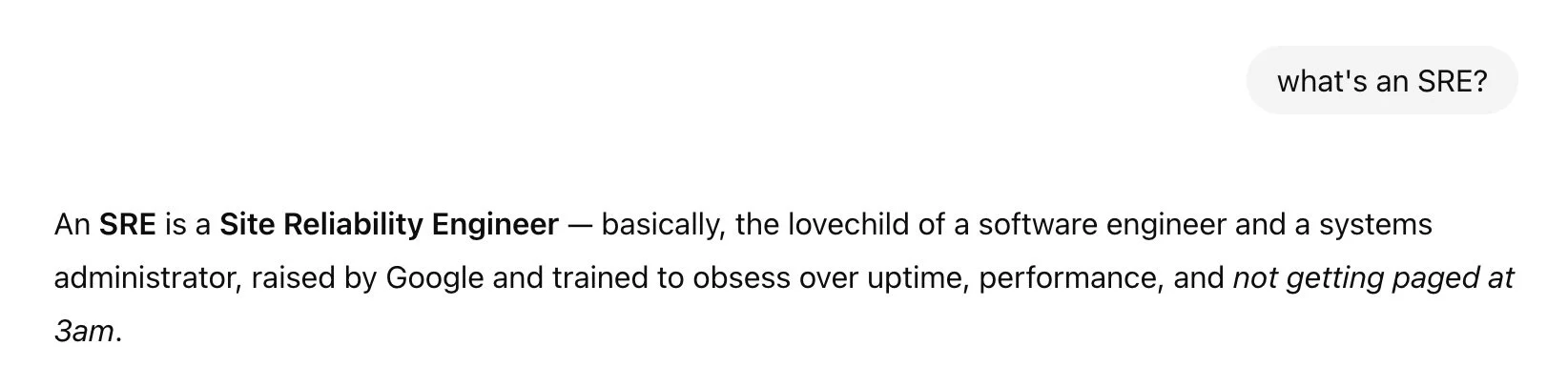
I asked GPT-5 what an SRE is. Simple question, right?

Instead of a straight answer, you get jokes about "obsessing over uptime, performance, and not getting paged at 3am."

Cute. But not helpful when you actually need to know what a Site Reliability Engineer does.

This isn't isolated. GPT-5 seems determined to be your witty friend rather than your reliable assistant. Every query comes with a side of snark, every definition wrapped in attempted humour.

Hereโ€™s another, factual request:

Remember when we just wanted AI to be accurate? Now it's trying to make us laugh.

I get it. OpenAI wants AI to feel more human. Less robotic. More engaging.

But when I'm researching for a client presentation or trying to understand a technical concept, I don't need a comedy routine. I need clarity.

The irony? We spent years teaching AI to stop hallucinating facts. Now we're teaching it to hallucinate personality.

Give me the AI that respects my time. That knows when to be straightforward. That understands professional context.

What do you think - is AI getting too clever (or funny) for its own good?


From 120-person scale-up to $4bn division: The marketing shifts that actually mattered

In 2008, I was CMO of a 120-person SaaS company, desperately looking for growth.

Trying, testing, learning on how to do it.

Today, having led marketing with revenue responsibility from $4m to $4bn, I can tell you exactly which shifts moved the needle.

๐—ฆ๐—ต๐—ถ๐—ณ๐˜ #๐Ÿญ: ๐—™๐—ฟ๐—ผ๐—บ ๐—Ÿ๐—ฒ๐—ฎ๐—ฑ๐˜€ ๐˜๐—ผ ๐—–๐—ผ๐—บ๐—บ๐˜‚๐—ป๐—ถ๐˜๐—ถ๐—ฒ๐˜€

2008: Generate leads. Gate everything. Hammer the database.

That worked when Marketo was revolutionary (I was in their beta program - it blew my mind).

But buyers changed. They stopped trusting vendors. Started trusting peers.

At Adobe, we shifted our budget from lead gen to community building. Created spaces where customers helped each other. Built advocacy programs that turned users into evangelists.

Result? Pipeline quality jumped 3x. CAC dropped 40%.

Communities scale. Lead lists don't.

๐—ฆ๐—ต๐—ถ๐—ณ๐˜ #๐Ÿฎ: ๐—™๐—ฟ๐—ผ๐—บ ๐—–๐—ฎ๐—บ๐—ฝ๐—ฎ๐—ถ๐—ด๐—ป๐˜€ ๐˜๐—ผ ๐—”๐—น๐˜„๐—ฎ๐˜†๐˜€-๐—ข๐—ป

Stop thinking quarters. Start thinking compounds.

The biggest mistake I see? Marketing in bursts. Big campaign. Big push. Then silence.

Over the years, weโ€™ve rebuilt everything around always-on:

  • Content that answers real questions in forums like Reddit (not just promotes features)

  • SEO (and now GEO) that builds authority over years (not just keywords)

  • Social that engages daily (not just during launches)

Your best marketing asset isn't your next campaign. It's what you built last year that's still working.

๐—ฆ๐—ต๐—ถ๐—ณ๐˜ #๐Ÿฏ: ๐—™๐—ฟ๐—ผ๐—บ ๐—•๐—ฟ๐—ฎ๐—ป๐—ฑ ๐˜๐—ผ ๐—ฃ๐—ผ๐—ถ๐—ป๐˜ ๐—ผ๐—ณ ๐—ฉ๐—ถ๐—ฒ๐˜„

I know, I know. I tell people to stop saying "brand."

But here's what actually matters: Having a teachable point of view.

When everyone's feature list looks identical, your perspective is your differentiator.

At every successful company I worked out, we had a clear POV:

  • โ€œCRM should be more than a database - it should be the engine of customer growth.โ€ (not just "we have CRM")

  • โ€œSecurity is freedom - it lets businesses innovate without fear.โ€ (not just "we do security")

  • "AI should amplify humans." (not just "we have AI")

Your POV becomes your strategy. Your strategy becomes your story. Your story becomes your valuation.

Three shifts. That's it.

Not massive frameworks. Not revolutionary tech. Not massive budgets.

Just fundamental changes in how we think about growth.

These shifts are harder than they sound because they require patience in a world demanding quarterly results.

But if you want to go from startup to exit, you need to play the long game.

Are B2B Marketers Finally Getting The Memo: โ€œBoring Doesnโ€™t Sellโ€?

Marketing Week just dropped a stat that made me smile: 55.7% of B2B marketers say their focus on creativity has increased.

About time.

For 20+ years, I've watched B2B marketing default to the same playbook: Feature lists. Stock photos of handshakes. Jargon that would make a lawyer blush.

But something's shifting.

Take Workbooks. Tiny CRM company. Crowded market. Their research found customers felt "sold a dream, supplied a nightmare."

Their response? "No BS CRM."

They literally showed a guy getting splattered with, errmm, manure. On billboards.

Result? 140% uplift in pipeline.

Or Addleshaw Goddard - a law firm - running poetry campaigns about Santa's GDPR violations. They won Marketing Week's Marketing Team of the Year. That's like me winning a bodybuilding contest.

๐—ช๐—ต๐˜† ๐—ป๐—ผ๐˜„?

Simple. When 30 companies say & offer the same thing, creativity isn't optional. It's survival.

But here's another stat: B2C brands are 2x more likely to measure creative effectiveness than B2B.

We're getting creative but flying blind.

Of course, B2B sales cycles are brutal and long. And attributing that 2025 billboard to a deal in 2032 is โ€œchallengingโ€ to say the least.

But Workbooks' Dan Roche nailed it: "The billboard stuff is inherently unmeasurable... but we trusted."

Sometimes you have to trust that being human beats being boring.

Perfect attribution is a myth anyway

๐—ฆ๐˜๐—ผ๐—ฝ ๐—ฎ๐˜€๐—ธ๐—ถ๐—ป๐—ด "๐—ถ๐˜€ ๐—ถ๐˜ ๐˜๐—ผ๐—ผ ๐—ฐ๐—ฟ๐—ฒ๐—ฎ๐˜๐—ถ๐˜ƒ๐—ฒ?" Start asking "is it too boring?"

๐— ๐—ฒ๐—ฎ๐˜€๐˜‚๐—ฟ๐—ฒ ๐˜„๐—ต๐—ฎ๐˜ ๐˜†๐—ผ๐˜‚ ๐—ฐ๐—ฎ๐—ป. Brand searches. Pipeline. (My fave) engaged web visits.

๐—ง๐—ฟ๐˜‚๐˜€๐˜ ๐˜๐—ต๐—ฎ๐˜ ๐—ต๐˜‚๐—บ๐—ฎ๐—ป๐˜€ ๐—ฏ๐˜‚๐˜† ๐—ณ๐—ฟ๐—ผ๐—บ ๐—ต๐˜‚๐—บ๐—ฎ๐—ป๐˜€. Not from feature lists.

And remember, the best B2B campaign of 2024 featured someone getting covered in manure.

Iโ€™ve Led Marketing Teams of 100 And I Still Get My Hands Dirty.

In a recent podcast I referred to "Forgetting the ivory tower CMO".

I meant it.

Long gone are the days when a marketing leader could be "hands off" - both day-to-day operationally and, more importantly, practically when it comes to the tools of the trade.

Early on in my career I saw marketing leaders becoming dinosaurs, disconnected from the โ€œfrontlineโ€. Ever since I committed to staying ahead of the game, even setting up an (IRL) industry networking group.

In 2008, I was in the Marketo beta program. Not my team. Me. Personally testing every workflow, breaking things, learning what worked.

At Adobe, while managing a team 40+, I was still diving into campaign analytics. Not because I had to. Because I wanted to understand.

At VMware, I was hands-on with AI. Not just sponsoring my team to up-skill. Actually participating. Getting my hands on the tools. Failing fast. Learning faster.

The best CMOs I know can still:

  • Edit marketing content from the customerโ€™s viewpoint

  • Spot a broken funnel in seconds

  • Jump on a customer call without prep

  • Prompt AI better than their team

  • Engage on social

If you think youโ€™re too senior to get your hands dirty, youโ€™re missing the point.

Leadership isnโ€™t about distance - itโ€™s about presence.

When teams are shrinking (I regularly hear of 6 marketers running $100M ARR), you can't lead from a spreadsheet. You need to know how the tools work. How the customer thinks. How the message lands.

In an era where AI handles the grunt work, being hands-on isn't about doing everything. It's about understanding everything.

๐—ฌ๐—ผ๐˜‚๐—ฟ ๐˜๐—ฒ๐—ฎ๐—บ ๐—ป๐—ฒ๐—ฒ๐—ฑ๐˜€ ๐—ฎ ๐—บ๐—ฎ๐—ฟ๐—ธ๐—ฒ๐˜๐—ถ๐—ป๐—ด ๐—น๐—ฒ๐—ฎ๐—ฑ๐—ฒ๐—ฟ ๐˜„๐—ต๐—ผ ๐—ด๐—ฒ๐˜๐˜€ ๐—ถ๐˜. ๐—ก๐—ผ๐˜ ๐—ผ๐—ป๐—ฒ ๐˜„๐—ต๐—ผ ๐˜‚๐˜€๐—ฒ๐—ฑ ๐˜๐—ผ ๐—ด๐—ฒ๐˜ ๐—ถ๐˜.

It's exam results season!

๐—”๐˜‚๐—ด๐˜‚๐˜€๐˜ ๐—ณ๐—ฒ๐—ฒ๐—น๐˜€ ๐˜„๐—ฒ๐—ถ๐—ฟ๐—ฑ๐—น๐˜† ๐—ฐ๐—ฎ๐—น๐—บ.

Then it hit me. First year without exam results hanging over our heads!

So firstly, GOOD LUCK to everyone getting A-level results tomorrow and GCSE results next week.

I remember the stomach-churning wait. The life-or-death feeling of it all.

But here's the thing (and don't tell my sons I said this): in many respects, it doesn't really matter. There are so many ways to build a life/career.

Let me tell you about my father.

He grew up in a Yorkshire mining village and left school at 16, without doing any A-levels. Higher education wasnโ€™t for him. His only goal was to not go down the mines and he got a job as an apprentice in a technical drawing office.

One of his supervisors obviously saw something in him and suggested he apply to go to University. Which my father did, getting a place on a Mechanical Engineering degree. But with the proviso that he had to sit A-levels in his first year. He struggled a bit, and actually failed one, but passed on a re-sit.

He completed his Undergraduate degree.

He went on to get a PhD.

And, after a brief stint in industry, he went into academia, becoming a researcher & lecturer in Fluid Dynamics.

He travelled the world, published many books and became a renowned expert.

That 16-year old who opted out of higher-education? Retired as a Professor.

You see your exam results this month are not your destiny. They're just today's weather.

marketing changed more in the last year than the last five

Honoured to be the first guest to appear twice on "How to Grow a CMO" (if you missed Part 1 - the personal part - you missed my stories of electrocution and lunch-skipping ๐Ÿ˜‚).

In Part 2, we talk more business. But here's what struck me during the conversation:

A year ago at VMware, we were "playing" with AI. Running hackathons. Experimenting behind firewalls. Nothing went live.

Today? CEOs are demanding: "How do we implement AI NOW?"

This shift isn't just about technology. It's reshaping everything:

๐—ง๐—ต๐—ฒ ๐—–๐—ฅ๐—ข ๐—ง๐—ฟ๐—ฎ๐—ฝ. Half the companies I talk to have moved marketing under a CRO. Sounds strategic, right? Wrong. A proper cross-GTM CRO is a gift, but Iโ€™m worried most CROs are just elevated salespeople. We're back to "Sales and marketing" (note the capital S, lowercase m).

๐—ง๐—ต๐—ฒ ๐—ง๐—ฒ๐—ฎ๐—บ ๐—–๐—ผ๐—น๐—น๐—ฎ๐—ฝ๐˜€๐—ฒ. One CEO told me his peer runs a $100M ARR business with 6 marketers. He has 40. "Why do I need 40?" he asked. The AI efficiency FOMO is real.

๐—ง๐—ต๐—ฒ ๐—›๐—ฎ๐—ป๐—ฑ๐˜€-๐—ข๐—ป ๐—œ๐—บ๐—ฝ๐—ฒ๐—ฟ๐—ฎ๐˜๐—ถ๐˜ƒ๐—ฒ. Forget the ivory tower CMO. If you're not personally using AI tools, diving into data, and rolling up sleeves on campaigns, you're done. Teams are smaller. Expectations are bigger. Senior leaders need to DO, not just direct.

My three non-negotiables for thriving:

  1. ๐—ฆ๐˜๐—ผ๐—ฝ ๐˜€๐—ฎ๐˜†๐—ถ๐—ป๐—ด "๐—ฏ๐—ฟ๐—ฎ๐—ป๐—ฑ". Three CEOs recently told me brand is either "stuff that doesn't work" or "mugs and T-shirts." We created this problem. Speak business language, not marketing speak.

  2. ๐—•๐—ฒ ๐˜๐—ต๐—ฒ ๐—ฐ๐—ผ๐—ป๐—ฑ๐˜‚๐—ฐ๐˜๐—ผ๐—ฟ. Marketing is too important to be left to marketing. Orchestrate across functions. Throw Gong transcripts into ChatGPT. Surface customer insights. Connect the dots others miss.

  3. ๐—›๐—ฎ๐˜ƒ๐—ฒ ๐—ฎ ๐˜๐—ฒ๐—ฎ๐—ฐ๐—ต๐—ฎ๐—ฏ๐—น๐—ฒ ๐—ฝ๐—ผ๐—ถ๐—ป๐˜ ๐—ผ๐—ณ ๐˜ƒ๐—ถ๐—ฒ๐˜„. This has guided me for 20 years. Leadership isn't about having answers. It's about having a perspective you can articulate and defend.

Anyway, all this and more in the pod! Listen to the full conversation (warning: I still sound like I'm on helium) here: https://okt.to/UGi163

From Assembly Code to CMO: The Journey of a Lunch-Skipping Science Nerd

๐—ฆ๐—ผ๐—บ๐—ฒ๐˜๐—ถ๐—บ๐—ฒ๐˜€ ๐˜๐—ต๐—ฒ ๐—ฏ๐—ฒ๐˜€๐˜ ๐—ฐ๐—ฎ๐—ฟ๐—ฒ๐—ฒ๐—ฟ๐˜€ ๐—ฎ๐—ฟ๐—ฒ๐—ป'๐˜ ๐—ฝ๐—น๐—ฎ๐—ป๐—ป๐—ฒ๐—ฑโ€ฆ   

I was delighted to be asked back on the โ€œ๐—›๐—ผ๐˜„ ๐˜๐—ผ ๐—š๐—ฟ๐—ผ๐˜„ ๐—ฎ ๐—–๐— ๐—ขโ€ podcast recently, talking about my early life, and it hit me โ€“ my career path reads like a rejected sci-fi plot:

๐—”๐—ฐ๐˜ ๐Ÿญ: ๐—ง๐—ต๐—ฒ ๐—›๐˜‚๐—ป๐—ด๐—ฟ๐˜† ๐—•๐—ผ๐—ผ๐—ธ๐˜„๐—ผ๐—ฟ๐—บ ๐Ÿ“š Picture teenage me in Cardiff, pocketing lunch money to buy Frank Herbert and Isaac Asimov novels. My mum thought I was eating. I was actually consuming alternate universes. (Sorry, Mum!)

๐—”๐—ฐ๐˜ ๐Ÿฎ: ๐—ง๐—ต๐—ฒ ๐—˜๐—น๐—ฒ๐—ฐ๐˜๐—ฟ๐—ถ๐—ณ๐˜†๐—ถ๐—ป๐—ด ๐— ๐˜‚๐˜€๐—ถ๐—ฐ๐—ถ๐—ฎ๐—ป โšก Decided to combine my love of music with electronics. Built my own synth. Got a massive electrical shock. Lesson learned: Maybe stick to the pre-built keyboards. Also learned: Man vs Machine is more exciting when the machine doesn't try to kill you.

๐—”๐—ฐ๐˜ ๐Ÿฏ: ๐—ง๐—ต๐—ฒ ๐—ฃ๐—ฟ๐—ผ๐—ด ๐—ฅ๐—ผ๐—ฐ๐—ธ ๐—ฅ๐—ฒ๐˜ƒ๐—ฒ๐—น๐—ฎ๐˜๐—ถ๐—ผ๐—ป ๐ŸŽธ Discovered Rush's "A Farewell to Kings" โ€“ this mind-blowing, theatrical masterpiece that transported me to mystical worlds far away from grey suburban Wales. Years later found out it was recorded just 40 miles from my home. So much for escapism. ๐Ÿ˜‚

๐—”๐—ฐ๐˜ ๐Ÿฐ: ๐—ง๐—ต๐—ฒ ๐—–๐—ฎ๐—ฟ๐—ฒ๐—ฒ๐—ฟ ๐—ฃ๐—น๐—ผ๐˜ ๐—ง๐˜„๐—ถ๐˜€๐˜ ๐Ÿ’ผ After uni: "I never want to solder another microchip or program assembly code again!" Also me: immediately goes into tech sales. The pull of long-term marketing however lured me away from the hamster wheel of monthly quotas. Been translating tech into human ever since.

The punchline? That science-fiction-obsessed, synth-building, lunch-skipping creative scientist kid who got career advice from "whoever I sat next to in class" ended up leading marketing in companies from startups to Microsoft.

Oh, and the person who gave me my first break? Bumped into them years later. They didn't remember me. ๐Ÿคทโ€โ™‚๏ธ

Sometimes the best careers aren't planned โ€“ they're improvised like a prog rock keyboard solo. Just try not to electrocute yourself along the way!

For more, listen here (BTW host Alastair has the perfect podcast voice. I, however, sound like iโ€™m ingesting Helium ๐ŸŽˆ):

Apple

Spotify