I’ve Led Marketing Teams of 100 And I Still Get My Hands Dirty.

In a recent podcast I referred to "Forgetting the ivory tower CMO".

I meant it.

Long gone are the days when a marketing leader could be "hands off" - both day-to-day operationally and, more importantly, practically when it comes to the tools of the trade.

Early on in my career I saw marketing leaders becoming dinosaurs, disconnected from the “frontline”. Ever since I committed to staying ahead of the game, even setting up an (IRL) industry networking group.

In 2008, I was in the Marketo beta program. Not my team. Me. Personally testing every workflow, breaking things, learning what worked.

At Adobe, while managing a team 40+, I was still diving into campaign analytics. Not because I had to. Because I wanted to understand.

At VMware, I was hands-on with AI. Not just sponsoring my team to up-skill. Actually participating. Getting my hands on the tools. Failing fast. Learning faster.

The best CMOs I know can still:

  • Edit marketing content from the customer’s viewpoint

  • Spot a broken funnel in seconds

  • Jump on a customer call without prep

  • Prompt AI better than their team

  • Engage on social

If you think you’re too senior to get your hands dirty, you’re missing the point.

Leadership isn’t about distance - it’s about presence.

When teams are shrinking (I regularly hear of 6 marketers running $100M ARR), you can't lead from a spreadsheet. You need to know how the tools work. How the customer thinks. How the message lands.

In an era where AI handles the grunt work, being hands-on isn't about doing everything. It's about understanding everything.

𝗬𝗼𝘂𝗿 𝘁𝗲𝗮𝗺 𝗻𝗲𝗲𝗱𝘀 𝗮 𝗺𝗮𝗿𝗸𝗲𝘁𝗶𝗻𝗴 𝗹𝗲𝗮𝗱𝗲𝗿 𝘄𝗵𝗼 𝗴𝗲𝘁𝘀 𝗶𝘁. 𝗡𝗼𝘁 𝗼𝗻𝗲 𝘄𝗵𝗼 𝘂𝘀𝗲𝗱 𝘁𝗼 𝗴𝗲𝘁 𝗶𝘁.

It's exam results season!

𝗔𝘂𝗴𝘂𝘀𝘁 𝗳𝗲𝗲𝗹𝘀 𝘄𝗲𝗶𝗿𝗱𝗹𝘆 𝗰𝗮𝗹𝗺.

Then it hit me. First year without exam results hanging over our heads!

So firstly, GOOD LUCK to everyone getting A-level results tomorrow and GCSE results next week.

I remember the stomach-churning wait. The life-or-death feeling of it all.

But here's the thing (and don't tell my sons I said this): in many respects, it doesn't really matter. There are so many ways to build a life/career.

Let me tell you about my father.

He grew up in a Yorkshire mining village and left school at 16, without doing any A-levels. Higher education wasn’t for him. His only goal was to not go down the mines and he got a job as an apprentice in a technical drawing office.

One of his supervisors obviously saw something in him and suggested he apply to go to University. Which my father did, getting a place on a Mechanical Engineering degree. But with the proviso that he had to sit A-levels in his first year. He struggled a bit, and actually failed one, but passed on a re-sit.

He completed his Undergraduate degree.

He went on to get a PhD.

And, after a brief stint in industry, he went into academia, becoming a researcher & lecturer in Fluid Dynamics.

He travelled the world, published many books and became a renowned expert.

That 16-year old who opted out of higher-education? Retired as a Professor.

You see your exam results this month are not your destiny. They're just today's weather.

marketing changed more in the last year than the last five

Honoured to be the first guest to appear twice on "How to Grow a CMO" (if you missed Part 1 - the personal part - you missed my stories of electrocution and lunch-skipping 😂).

In Part 2, we talk more business. But here's what struck me during the conversation:

A year ago at VMware, we were "playing" with AI. Running hackathons. Experimenting behind firewalls. Nothing went live.

Today? CEOs are demanding: "How do we implement AI NOW?"

This shift isn't just about technology. It's reshaping everything:

𝗧𝗵𝗲 𝗖𝗥𝗢 𝗧𝗿𝗮𝗽. Half the companies I talk to have moved marketing under a CRO. Sounds strategic, right? Wrong. A proper cross-GTM CRO is a gift, but I’m worried most CROs are just elevated salespeople. We're back to "Sales and marketing" (note the capital S, lowercase m).

𝗧𝗵𝗲 𝗧𝗲𝗮𝗺 𝗖𝗼𝗹𝗹𝗮𝗽𝘀𝗲. One CEO told me his peer runs a $100M ARR business with 6 marketers. He has 40. "Why do I need 40?" he asked. The AI efficiency FOMO is real.

𝗧𝗵𝗲 𝗛𝗮𝗻𝗱𝘀-𝗢𝗻 𝗜𝗺𝗽𝗲𝗿𝗮𝘁𝗶𝘃𝗲. Forget the ivory tower CMO. If you're not personally using AI tools, diving into data, and rolling up sleeves on campaigns, you're done. Teams are smaller. Expectations are bigger. Senior leaders need to DO, not just direct.

My three non-negotiables for thriving:

  1. 𝗦𝘁𝗼𝗽 𝘀𝗮𝘆𝗶𝗻𝗴 "𝗯𝗿𝗮𝗻𝗱". Three CEOs recently told me brand is either "stuff that doesn't work" or "mugs and T-shirts." We created this problem. Speak business language, not marketing speak.

  2. 𝗕𝗲 𝘁𝗵𝗲 𝗰𝗼𝗻𝗱𝘂𝗰𝘁𝗼𝗿. Marketing is too important to be left to marketing. Orchestrate across functions. Throw Gong transcripts into ChatGPT. Surface customer insights. Connect the dots others miss.

  3. 𝗛𝗮𝘃𝗲 𝗮 𝘁𝗲𝗮𝗰𝗵𝗮𝗯𝗹𝗲 𝗽𝗼𝗶𝗻𝘁 𝗼𝗳 𝘃𝗶𝗲𝘄. This has guided me for 20 years. Leadership isn't about having answers. It's about having a perspective you can articulate and defend.

Anyway, all this and more in the pod! Listen to the full conversation (warning: I still sound like I'm on helium) here: https://okt.to/UGi163

From Assembly Code to CMO: The Journey of a Lunch-Skipping Science Nerd

𝗦𝗼𝗺𝗲𝘁𝗶𝗺𝗲𝘀 𝘁𝗵𝗲 𝗯𝗲𝘀𝘁 𝗰𝗮𝗿𝗲𝗲𝗿𝘀 𝗮𝗿𝗲𝗻'𝘁 𝗽𝗹𝗮𝗻𝗻𝗲𝗱…   

I was delighted to be asked back on the “𝗛𝗼𝘄 𝘁𝗼 𝗚𝗿𝗼𝘄 𝗮 𝗖𝗠𝗢” podcast recently, talking about my early life, and it hit me – my career path reads like a rejected sci-fi plot:

𝗔𝗰𝘁 𝟭: 𝗧𝗵𝗲 𝗛𝘂𝗻𝗴𝗿𝘆 𝗕𝗼𝗼𝗸𝘄𝗼𝗿𝗺 📚 Picture teenage me in Cardiff, pocketing lunch money to buy Frank Herbert and Isaac Asimov novels. My mum thought I was eating. I was actually consuming alternate universes. (Sorry, Mum!)

𝗔𝗰𝘁 𝟮: 𝗧𝗵𝗲 𝗘𝗹𝗲𝗰𝘁𝗿𝗶𝗳𝘆𝗶𝗻𝗴 𝗠𝘂𝘀𝗶𝗰𝗶𝗮𝗻 ⚡ Decided to combine my love of music with electronics. Built my own synth. Got a massive electrical shock. Lesson learned: Maybe stick to the pre-built keyboards. Also learned: Man vs Machine is more exciting when the machine doesn't try to kill you.

𝗔𝗰𝘁 𝟯: 𝗧𝗵𝗲 𝗣𝗿𝗼𝗴 𝗥𝗼𝗰𝗸 𝗥𝗲𝘃𝗲𝗹𝗮𝘁𝗶𝗼𝗻 🎸 Discovered Rush's "A Farewell to Kings" – this mind-blowing, theatrical masterpiece that transported me to mystical worlds far away from grey suburban Wales. Years later found out it was recorded just 40 miles from my home. So much for escapism. 😂

𝗔𝗰𝘁 𝟰: 𝗧𝗵𝗲 𝗖𝗮𝗿𝗲𝗲𝗿 𝗣𝗹𝗼𝘁 𝗧𝘄𝗶𝘀𝘁 💼 After uni: "I never want to solder another microchip or program assembly code again!" Also me: immediately goes into tech sales. The pull of long-term marketing however lured me away from the hamster wheel of monthly quotas. Been translating tech into human ever since.

The punchline? That science-fiction-obsessed, synth-building, lunch-skipping creative scientist kid who got career advice from "whoever I sat next to in class" ended up leading marketing in companies from startups to Microsoft.

Oh, and the person who gave me my first break? Bumped into them years later. They didn't remember me. 🤷‍♂️

Sometimes the best careers aren't planned – they're improvised like a prog rock keyboard solo. Just try not to electrocute yourself along the way!

For more, listen here (BTW host Alastair has the perfect podcast voice. I, however, sound like i’m ingesting Helium 🎈):

Apple

Spotify

How I’d rebuild marketing teams in 2025

𝗧𝗵𝗲 𝘁𝗿𝗮𝗱𝗶𝘁𝗶𝗼𝗻𝗮𝗹 𝗺𝗮𝗿𝗸𝗲𝘁𝗶𝗻𝗴 𝗼𝗿𝗴 𝗰𝗵𝗮𝗿𝘁 𝗶𝘀 𝗱𝗲𝗮𝗱.

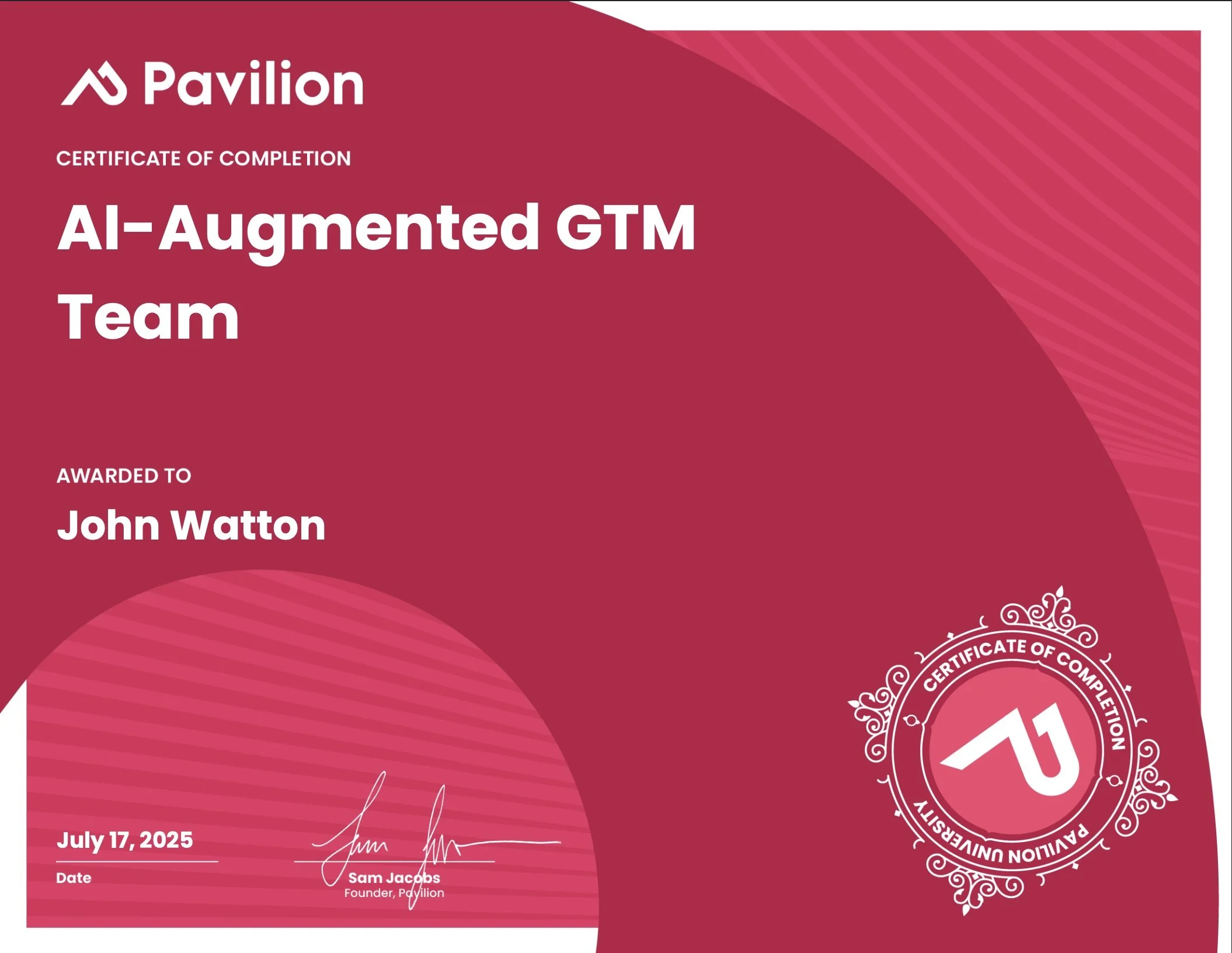
I've been thinking about this since completing my Pavilion AI-Augmented GTM certification a few weeks back. The teams that thrive in 2025 won't be the ones with the biggest budgets or the most bodies. They'll be the ones that understand how AI reshapes everything.

Here's my blueprint:

𝟭. 𝗦𝘁𝗮𝗿𝘁 𝘄𝗶𝘁𝗵 𝗔𝗜 𝗹𝗶𝘁𝗲𝗿𝗮𝗰𝘆, 𝗻𝗼𝘁 𝗔𝗜 𝘁𝗼𝗼𝗹𝘀. Every marketer needs to understand prompting, workflow automation and how to spot AI-generated rubbish. This isn't a nice-to-have anymore. It's table stakes.

𝟮. 𝗛𝗶𝗿𝗲 𝗳𝗲𝘄𝗲𝗿, 𝗺𝗼𝗿𝗲 𝘀𝗲𝗻𝗶𝗼𝗿 "𝗖𝗼𝗻𝘁𝗲𝘅𝘁 𝗘𝘅𝗽𝗲𝗿𝘁𝘀." AI can write copy, build campaigns and analyze data. But it can't replace experience and the key not is not prompt engineering, its context engineering. The future belongs to seasoned marketers who can guide AI with wisdom, not junior executors doing tasks AI does better.

𝟯. 𝗕𝘂𝗶𝗹𝗱 𝗺𝗶𝗰𝗿𝗼-𝘄𝗼𝗿𝗸𝗳𝗹𝗼𝘄 𝘁𝗲𝗮𝗺𝘀. Forget functional silos. Create small, cross-functional pods that own end-to-end workflows - from content creation to lead nurturing to customer advocacy. Each pod gets AI tools, clear outcomes and the freedom to iterate fast.

𝟰. 𝗠𝗮𝗸𝗲 𝗲𝘃𝗲𝗿𝘆𝗼𝗻𝗲 𝗮 "𝗣𝗿𝗼𝗺𝗽𝘁 𝗘𝘅𝗽𝗲𝗿𝘁." The marketers who win are the ones who can get AI to do exactly what they want. Context is important but everyone needs to know how to prompt. Build internal libraries of what works. Share wins across teams.

𝟱. 𝗢𝗽𝘁𝗶𝗺𝗶𝘀𝗲 𝗳𝗼𝗿 𝘀𝘁𝗿𝗮𝘁𝗲𝗴𝗶𝗰 𝗰𝗮𝗽𝗮𝗰𝗶𝘁𝘆. When AI handles the execution grunt work, your team gets 10+ hours back per week. Don't fill that time with more meetings. Use it for the high-leverage thinking that only humans can do.

Most marketing teams are still hiring like it's 2008. They're adding bodies to do work that AI already does better, faster and cheaper.

The teams that get this right will outpace their competition by 10x, not 10%.

It's not about replacing humans. It's about hiring the right humans and amplifying them with the right AI.

I need more budget!

!! 𝗜 𝗡𝗘𝗘𝗗 𝗠𝗢𝗥𝗘 𝗕𝗨𝗗𝗚𝗘𝗧  !!

Every marketing leader's favourite line. I've said it. You've said it. We've all said it.

In fact there hasn’t been a place I’ve worked - from start-ups all the way up to Microsoft - where budget hasn’t temptingly been the answer to all our marketing ills.

But here's the uncomfortable truth: More budget won't fix broken fundamentals.

I've watched teams double their spend and halve their impact. Seen startups with shoestring budgets outmanoeuvre enterprises with millions. The pattern is clear - success isn't about resources, it's about 𝘳𝘦𝘴𝘰𝘶𝘳𝘤𝘦𝘧𝘶𝘭𝘯𝘦𝘴𝘴.

More often that not, the real problems hiding behind "I need more budget" fall into five buckets:

𝗡𝗼 𝗰𝗹𝗲𝗮𝗿 𝘀𝘁𝗿𝗮𝘁𝗲𝗴𝘆. Can't articulate what you're trying to achieve? Money won't help. I once inherited a team spending £500K/month (lucky me!) on digital with no idea why (unlucky me!). Cut it by 70%. Results improved.

𝗣𝗼𝗼𝗿 𝗲𝘅𝗲𝗰𝘂𝘁𝗶𝗼𝗻. Your current campaigns underperform? Adding zeros won't change that. Fix what you have before asking for more. One time we tripled leads by simply testing headlines. Cost: £0.

𝗪𝗿𝗼𝗻𝗴 𝗳𝗼𝗰𝘂𝘀. Chasing every shiny channel instead of mastering one? That's not a budget problem. That's a discipline problem. The best B2B marketers I know dominate 2-3 channels max.

𝗡𝗼 𝗺𝗲𝗮𝘀𝘂𝗿𝗲𝗺𝗲𝗻𝘁. "We need more budget" often means "I can't prove what's working." If you can't show ROI on your first £10K, why should anyone trust you with £100K?

𝗧𝗲𝗮𝗺 𝗴𝗮𝗽𝘀. Sometimes it's not about more people - it's about the right people. Lean can win - one senior strategist backed by AI beats five junior executors trying their best. Every time.

Here’s four ideas to increase marketing effectiveness without the need to request more $$$:

✅ 𝗠𝗶𝗻𝗲 𝗬𝗼𝘂𝗿 𝗖𝘂𝘀𝘁𝗼𝗺𝗲𝗿 𝗖𝗼𝗻𝘃𝗲𝗿𝘀𝗮𝘁𝗶𝗼𝗻𝘀. Feed transcripts into ChatGPT. Identify trends, pain points, and exact phrases used. Refine existing programs using customer language.

✅ 𝗧𝘂𝗿𝗻 𝗬𝗼𝘂𝗿 𝗧𝗲𝗮𝗺 𝗶𝗻𝘁𝗼 𝗧𝗵𝗼𝘂𝗴𝗵𝘁 𝗟𝗲𝗮𝗱𝗲𝗿𝘀. Instead of hiring influencers or paying for reach, activate the voices you already have (Hubspot do!).

✅ 𝗕𝘂𝗶𝗹𝗱 𝗦𝘁𝗿𝗮𝘁𝗲𝗴𝗶𝗰 𝗠𝗶𝗰𝗿𝗼-𝗣𝗮𝗿𝘁𝗻𝗲𝗿𝘀𝗵𝗶𝗽𝘀. Forget expensive sponsorships. Focus on high-value, low-cost collaborations with complementary businesses. Co-create resources that benefit both audiences.

✅ 𝗟𝗲𝘃𝗲𝗿𝗮𝗴𝗲 𝗥𝗲𝗱𝗱𝗶𝘁. Build authentic presence in relevant subreddits and communities. Costs nothing and helps AI search visibility.

Next time you're tempted to say "I need more budget," ask yourself “Have I maximised what I already have?”

The best marketers don't wait for resources. They create results with whatever they've got.

Then, and only then, do they earn the right to ask for more.

Your GTM Team Just Got Rewired by AI

💡 AI isn’t just changing how GTM teams work - it’s changing what they are.

I recently wrapped the AI-Augmented GTM Team course by Ryan Staley via Pavilion. What I took away was a glimpse into how AI is rewiring the very structure and rhythm of modern go-to-market teams.

Here are 5 deeper shifts I’m seeing:

1️⃣ AI is flattening GTM hierarchies.
Junior team members now have senior-level reach - thanks to real-time coaching, research copilots, and automated execution. The experience gap? Compressed. The org chart? Evolving.

2️⃣ Strategic capacity is the new ROI.
It’s not about doing more, it’s about removing the work that doesn’t move the needle. The best GTM leaders are reclaiming 10+ hours/week by automating repetitive grind, and reinvesting that time in high-leverage thinking.

3️⃣ GTM is now a system of micro-workflows.
From SEO content loops to automated outbound sequences, the future is modular. AI is helping teams pilot, scale, and iterate fast - without waiting for a reorg.

4️⃣ Cross-functional finally means connected.
Tools like “Customer Brain” are stitching together notes from Product, CS, and Sales making true orchestration across the funnel possible. AI is unifying teams.

5️⃣ AI literacy isn’t enough. We need AI leadership.
The winning play? Nominate a champion. Run a sprint. Measure. Iterate. The GTM leaders who treat AI like a product function are the ones pulling ahead.

🔁 The question isn’t “should we use AI?”
It’s: What are we doing with the time, insight, and capacity it unlocks?

#GTM #AIinMarketing #AILeadership #MarketingOps #SalesEnablement #Pavilion #GoToMarket #AITransformation #PromptEngineering

Stay Curious!

Yes, you can teach old dogs new tricks!

I’m a hobbiest musician (OK, more like an engineer given my passion for vintage synths), and have been using the same music production software (Cubase) for over 30 years. However, recently I decided to switch and embark on a training course to learn another - Ableton.

Why? Well, to be honest, I was just curious. Curious about how Ableton worked, what was different and how I might change/improve my own workflows Plus I love to learn. In the world of growth mindset thinking I like to think I’m a “learn-it-all” vs a “know-it-all”.

Curiosity, for me, is the single most important skill a marketer can have. Yet I’m constantly surprised by how many marketers just aren’t that interested in doing things differently - or even better. That’s crazy, especially when you think about the last decade: we’ve had a front-row seat to how consumer tech and platforms have reshaped everything. And still, many stick to the same old playbook. In today’s world, personal life blends into work life. What we learn as consumers should inspire how we think as marketers, even in B2B.

My own curiosity experiments have taught me more than any conference:

  • Running a daily music blog for a year to explore content marketing.

  • Swapping from iOS to Android to see life outside the Apple bubble.

  • Signing up for new social platforms (and often deleting soon after) to understand how new communities may transform my marketing.

  • Subscribing to AI tools like Perplexity, Beautiful AI, ChatGPT, MyTelescope and others to learn hands on about AI-powered marketing.

The pattern is clear: The marketers who thrive aren't the ones with the biggest budgets or fanciest titles. They're the ones who stay curious.

They ask the uncomfortable questions. Test the unproven channels.

Your next breakthrough won't come from optimising what you already know. It'll come from exploring what you don't.

Stay Curious!

Why I love a manifesto

I have to say, I love a company manifesto.

Reminded to me when opening up my new Moleskine notebook*, I was pleased to see theirs.

Every brand should have one. In a highly competitive world dominated by sameness and mediocrity this is your chance to work out “why you?”:

✅ Have a point of view on the market.

✅ Express that there needs to be a better way.

✅ Show what you’re doing differently.

It’s the foundation for your brand and should be a few paragraphs that uniquely distils your value.

A manifesto isn't another set of corporate waffle words. It's something your employees can use, as well as the North Star to check back on when making decisions.

A real manifesto does three things:

  • Lays out a bold vision for your company and your industry

  • Talks about the customer challenge, not your products or services.

  • Forces brutal honesty about who you actually are (not who you pretend to be).

It's your promise to yourself before it's a promise to the world.

Without it? You're just another brand having an identity crisis, with every customer-facing employee making up their own story. Rather than harnessing your true value to the world.

Give it a go!

———————————————————————————-

*And yes, I love making written notes. In some situations the hand-eye-brain coordination just make things stick better for me. In fact, the very act of writing something down instantly commits it to my memory. It’s weird. So whilst I’m a big fan of AI notetakers, I’m working through yet another AI/human balancing act!